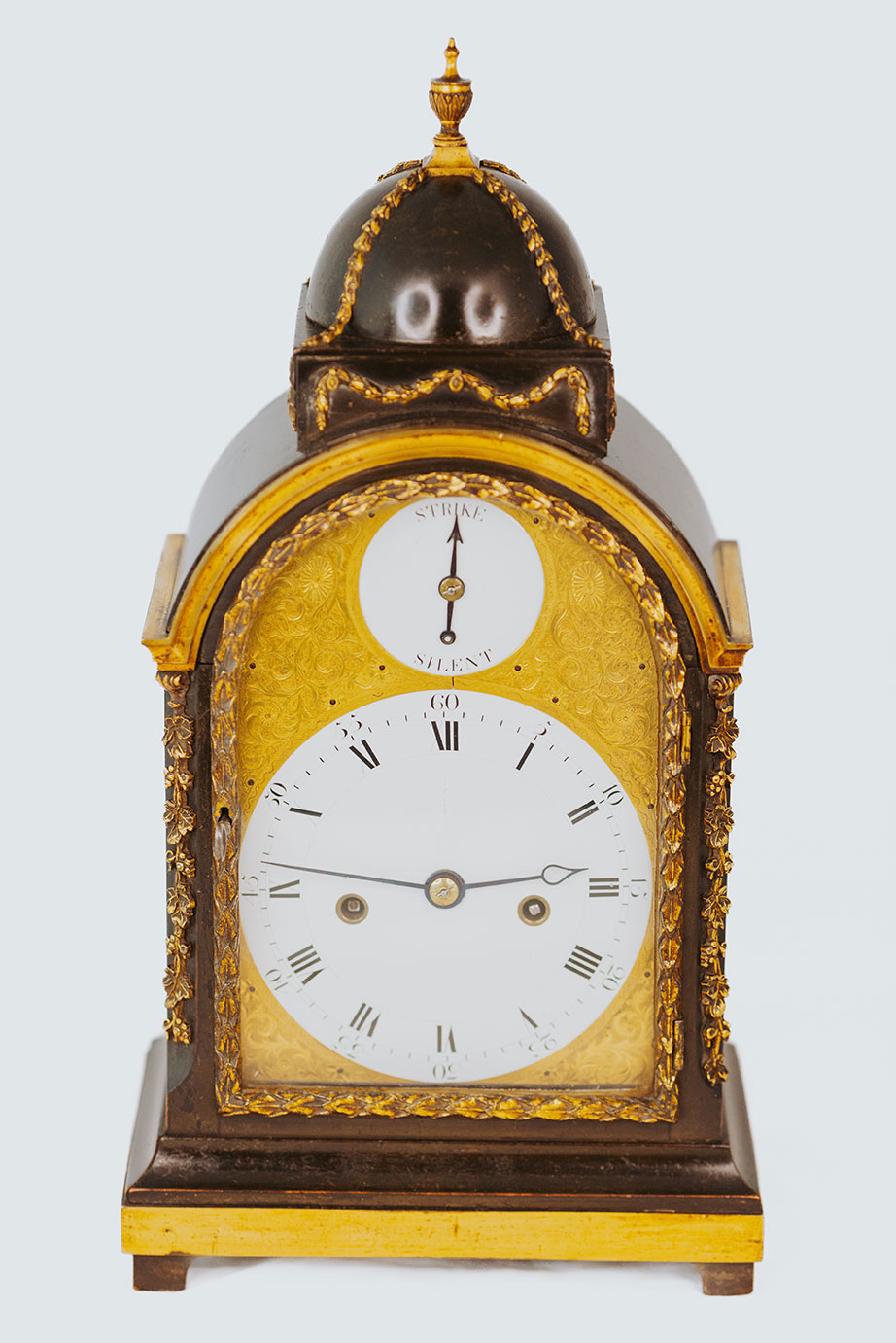
EDWARD FAULKNER
LONDON
Date: c1710
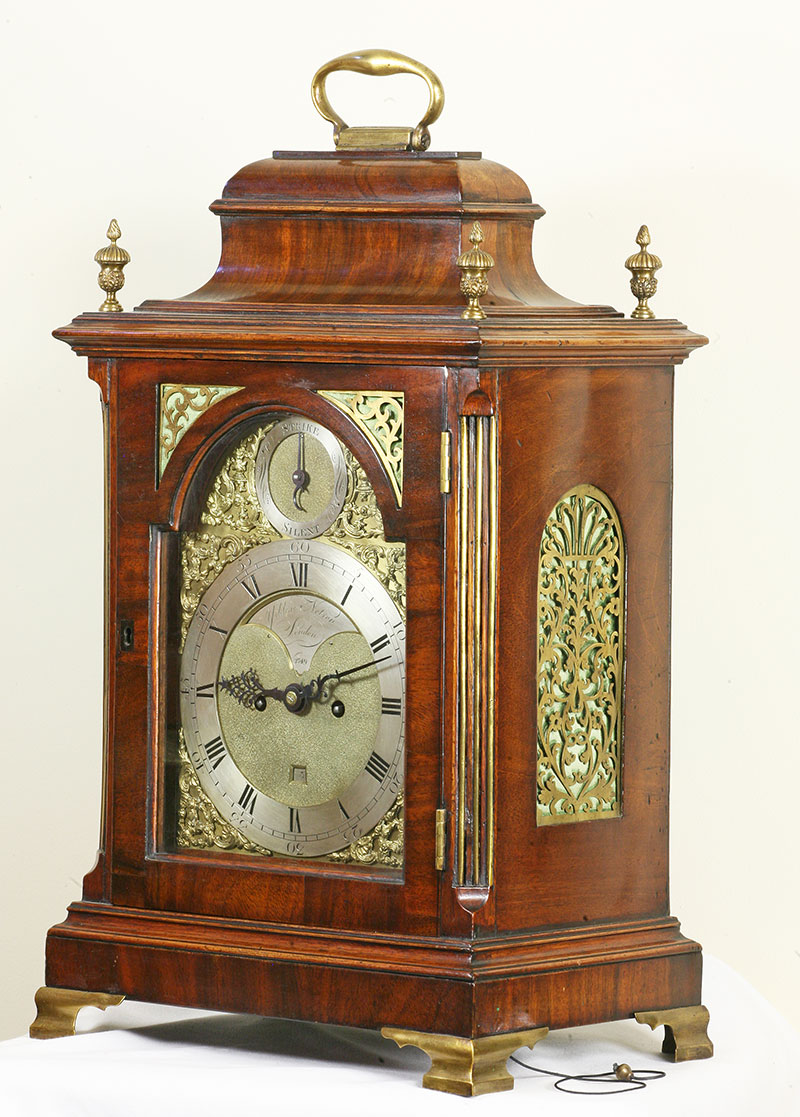
A fine Queen Anne spring table clock.
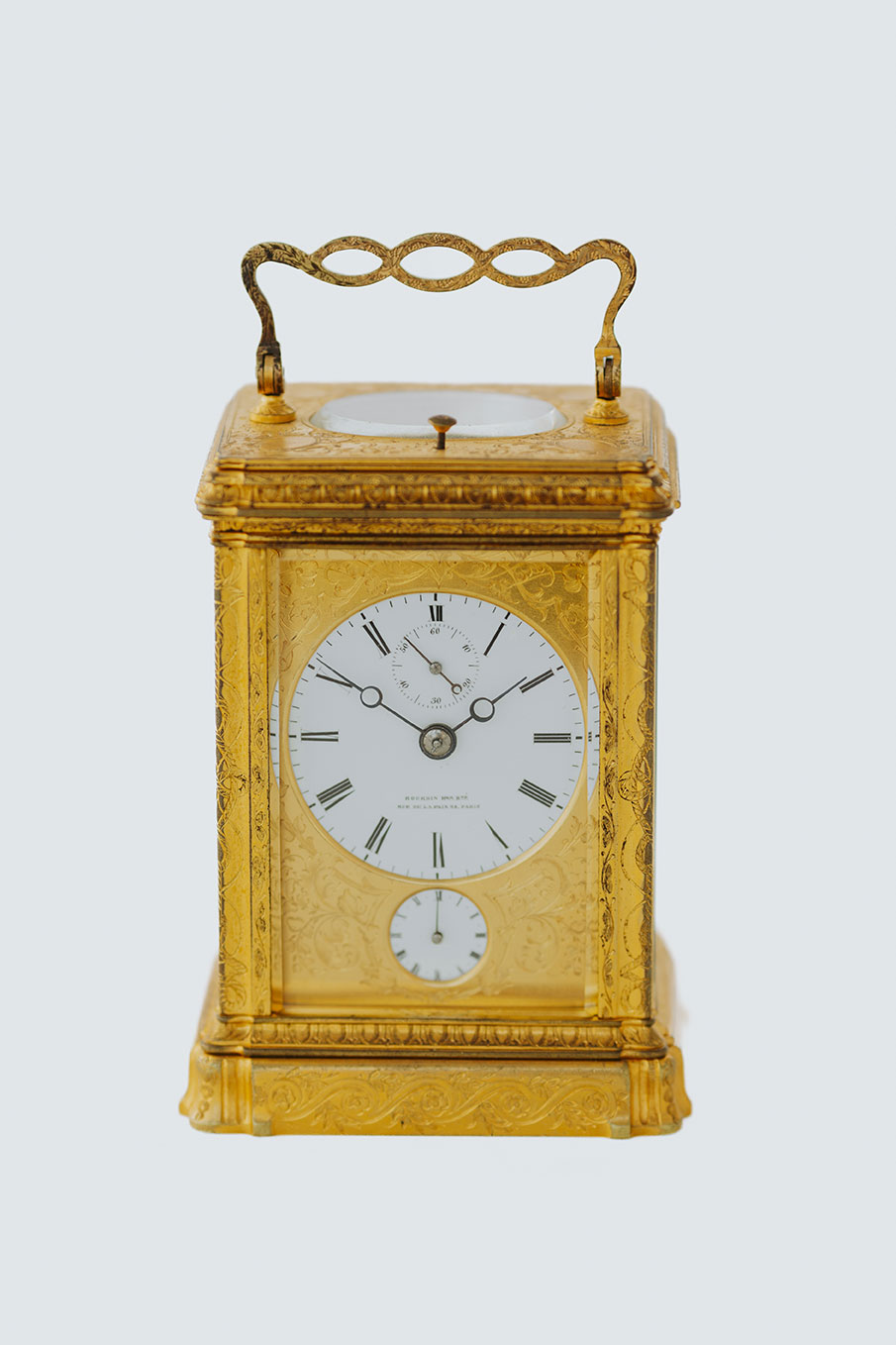
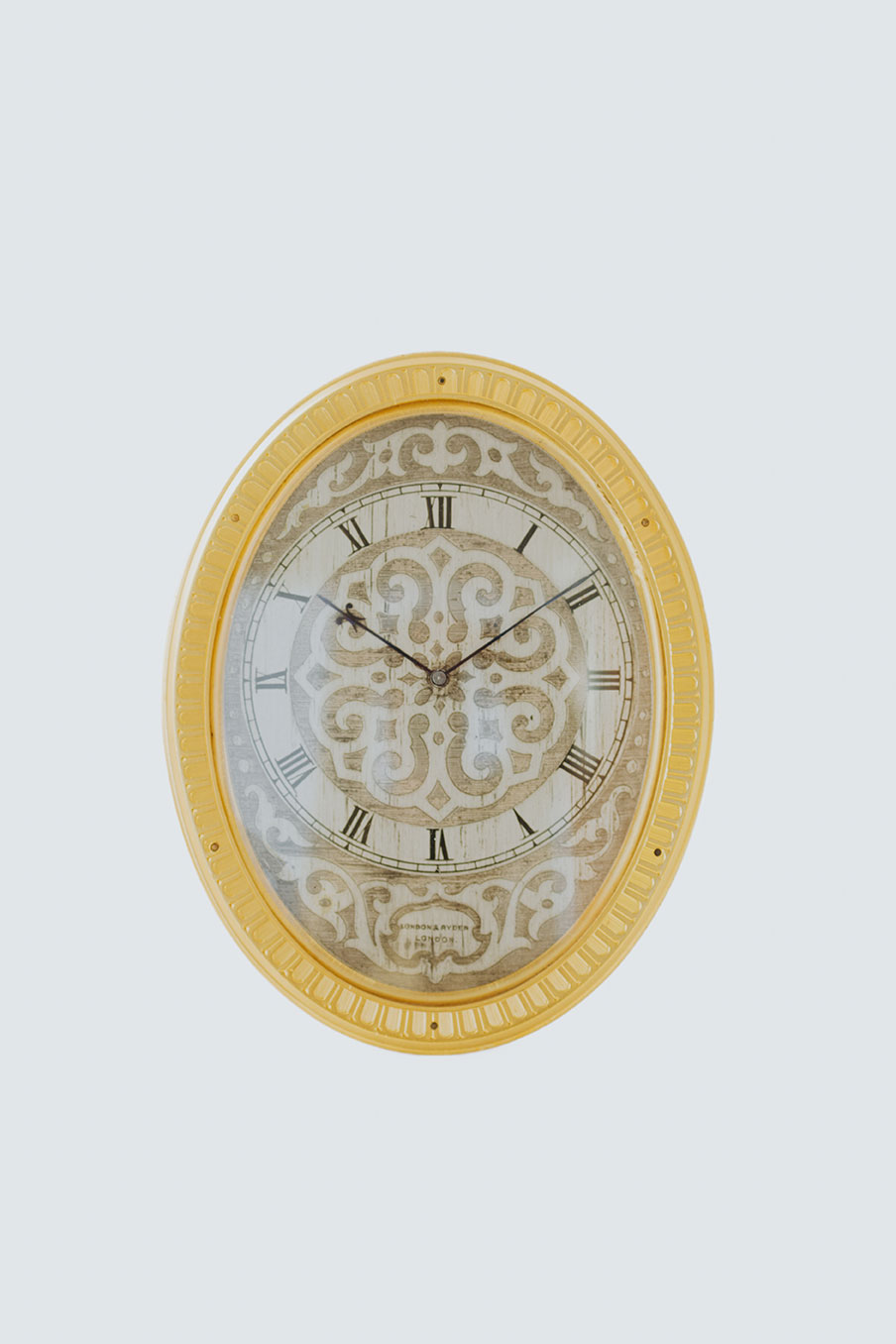
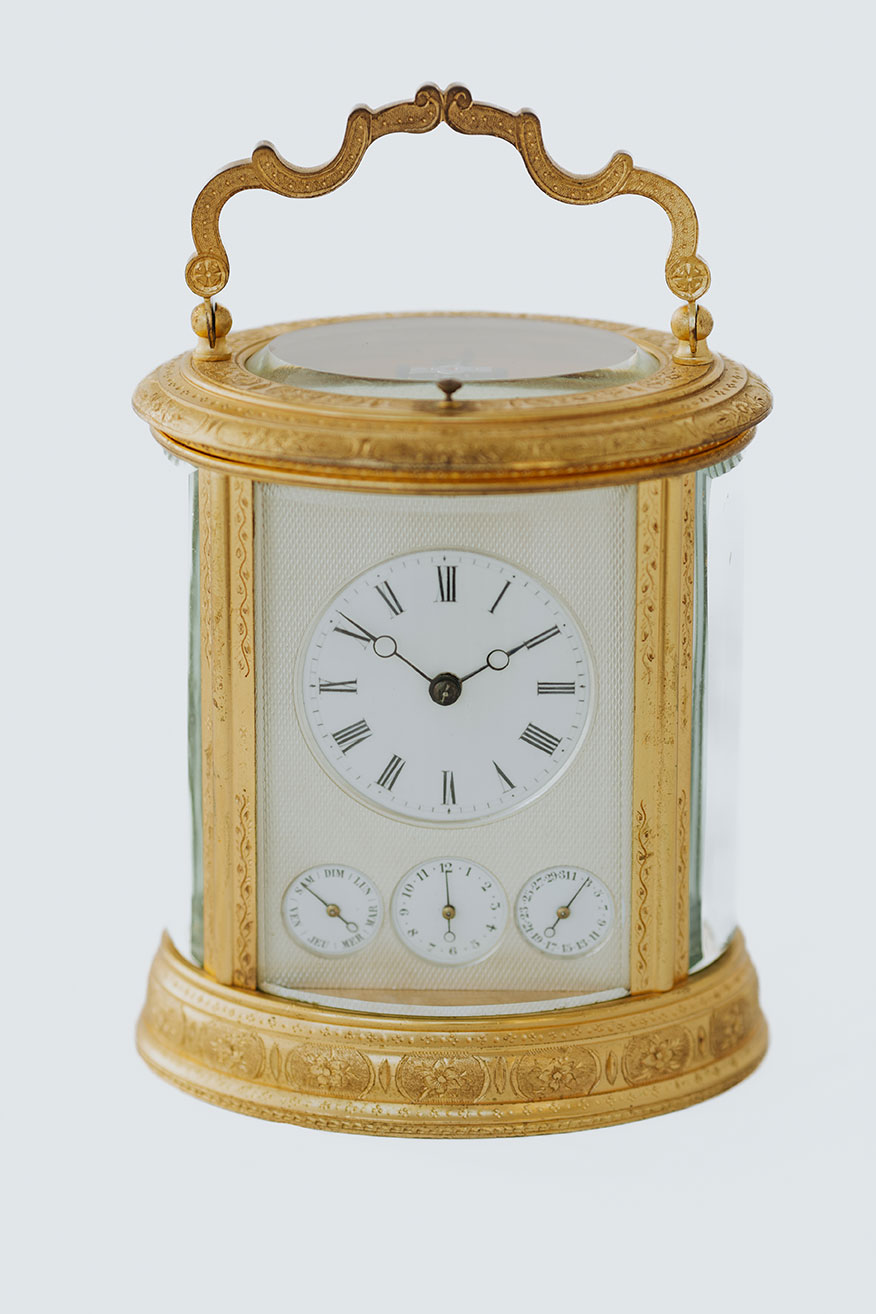
An enamel oval panelled French carriage clock
Date: c1880
HENRY MARC
PARIS
Date: c1890
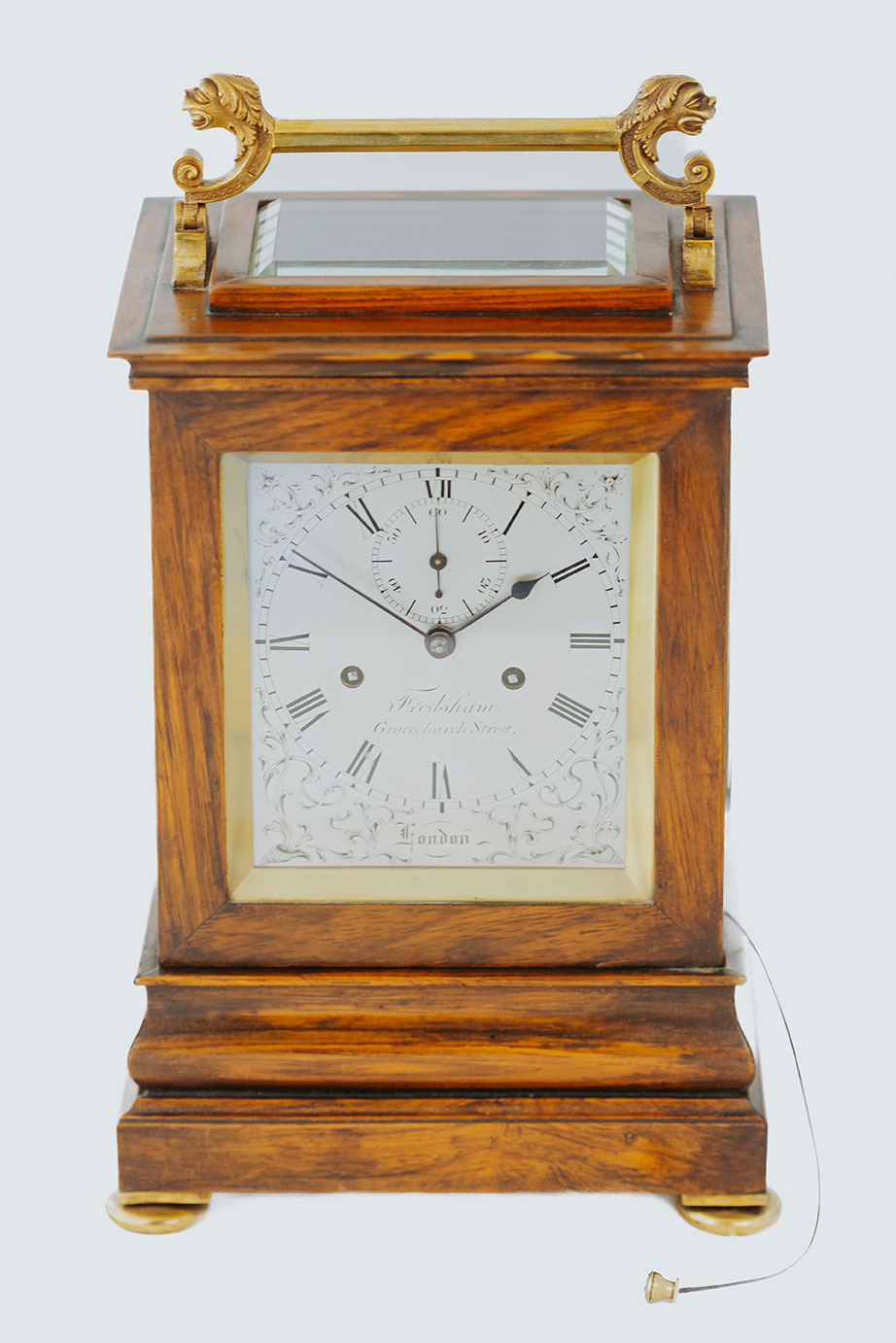
The ebony veneered case with glazed side panels having pierced gilt sound frets above, glazed front door with similar sound fret, standing on bun feet with brass folding handle. The 7 inch brass dial with winged cherub spandrels, silvered chapter ring with Roman numerals and outside minute indications at five minute intervals and cruciform half hour markers, the matted centre with mock pendulum and chamfered date aperture and with blued steel pierced hands, strike/not strike lever to the left of the dial.
The eight-day duration five pillar fusee movement with verge escapement sounding the hours on a bell with repeat cord. The very well engraved backplate profusely engraved with foliate scrolls and wheat-ear border centred by a loin’s mask and cartouche signed Ed. Faulkner, London.

Case height: 13 ½ inches (34.25 cm).

F.J Britten records Edward Faulkner from 1710-1735 and was Master of the Clockmakers’ Company 1734.

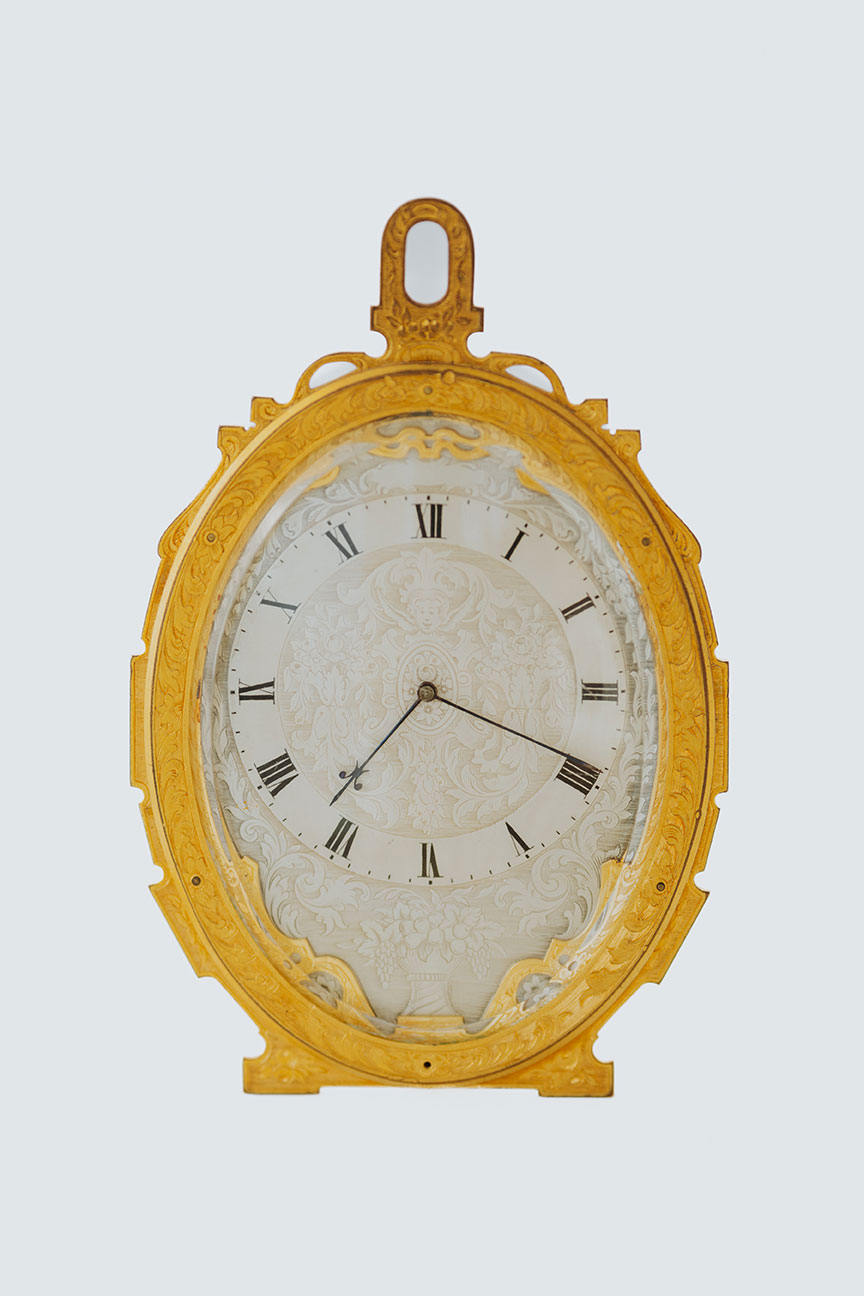
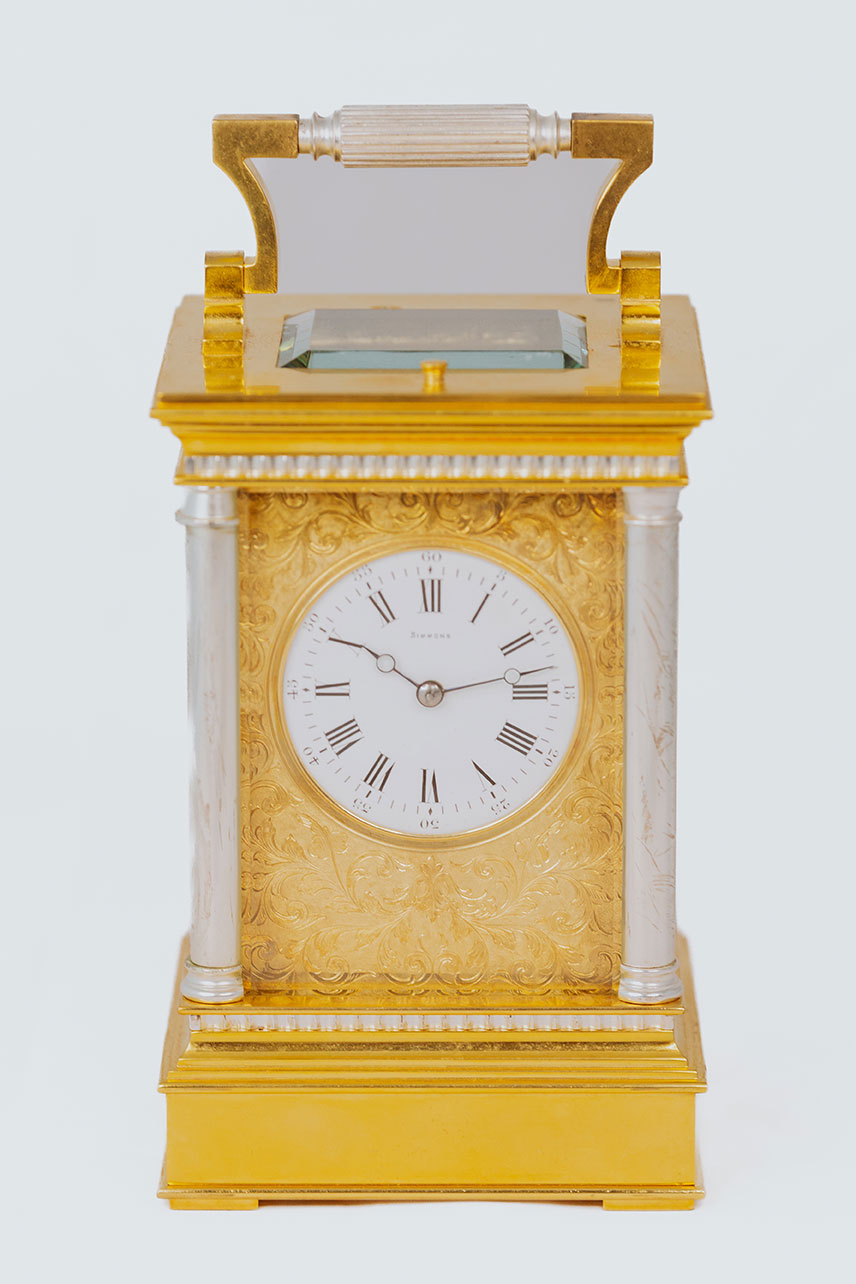
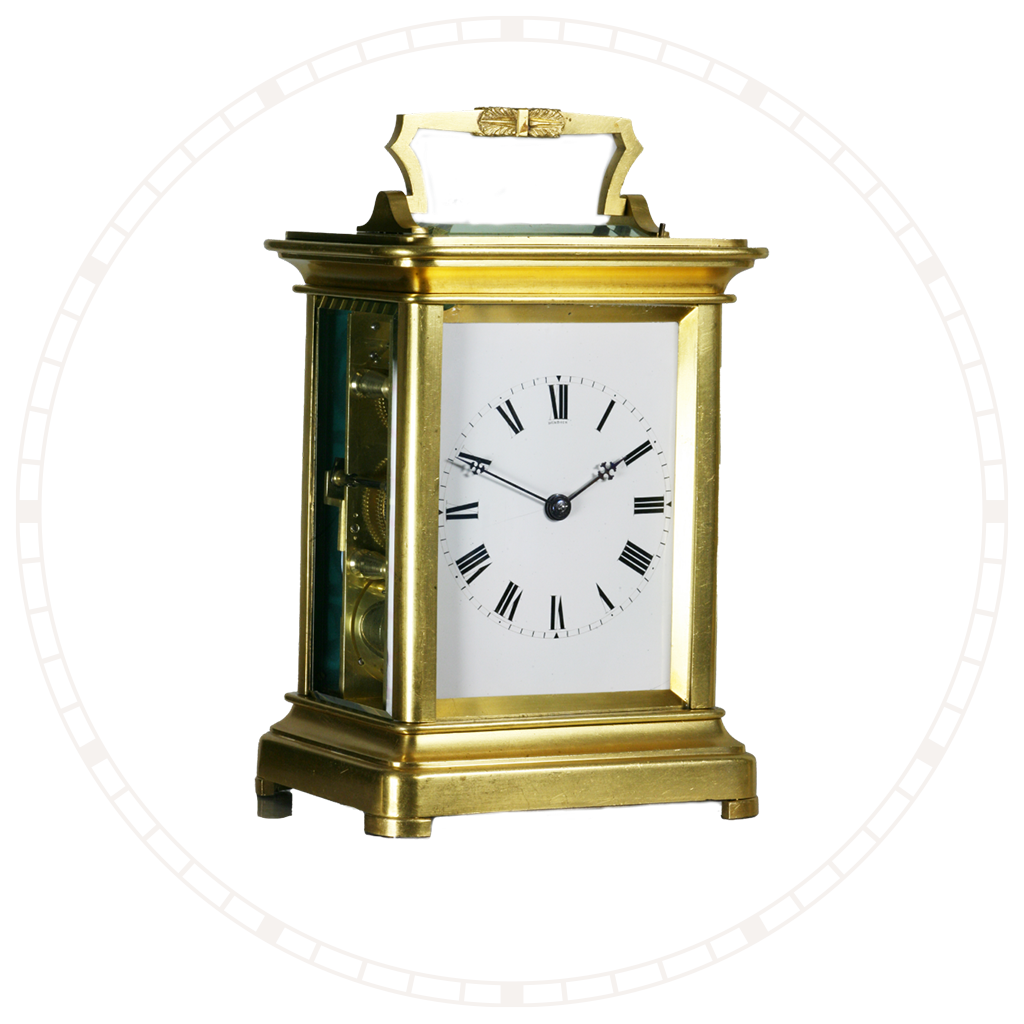
The cannelee style gilt-brass case with top panel set with an oval glass, having silvered engine-turned side panels with oval enamel plaques depicting young ladies within a rural landscape; the enamel dial with similar engine-turned mask having Roman numerals and blued steel spade hands decorated with a winged cherub and below a separate oval plaque showing a young lady seated holding a baby lamb.
The two train spring barrel movement sounding the hours and half hours on a gong, with repeat, surmounted by a silvered lever platform escapement.

Case height: 5 ½ inches (14 cms).

A carriage clock with a similar case style is illustrated in ‘Carriage Clocks their history and development’ by Charles Allix and Peter Bonnert’, page 204 plate V111/13.

A rare giant four dialled carriage clock.
The four dials, with Roman numerals and blued steel moon hands each signed HRY. MARC set upon an engine turned dial plate; the eight day timepiece movement with lever escapement wound from the base of the gilt-brass case.
£3,250.00

Case height: 9 inches (23cms).

See ‘Carriage Clocks their history and development’ by Charles Allix and Peter Bonnert, page 445 where similar clock by Henry Marc is mentioned.

PARKINSON & FRODSHAM
Change Alley
London
No. 3509
Date: c1850/55
FRENCH
Royal Exchange
LONDON
No: 9912
Date: c1855

THOS. COLE
No: 1880
Date: c1864

The 3 ½ inch silvered dial with Roman numerals, minute intervals, up/down indicator and seconds chapter above V1 with blued steel hands signed PARKINSON & FRODSHAM, Change Alley, LONDON 3509. The movement, with spotted plates, chain fusée and maintaining power with Earnshaw’s spring detent escapement with cut bimetallic balance and blued steel helical balance spring. The rosewood three tier brass bound box, with a signed ivory plaque on the middle section and numbered ivory plaque on the base section, with brass drop handles. Complete with tipsy winding key.

£ 5,250

A very good eight-day duration Marine Chronometer with Barraud’s Patent winding.

The three-tier brass-bound mahogany box with ivory plaque to the middle tier, signed FRENCH and numbered 0 over 9912, with brass flush handles, the gimballed bowl with 4 ½ inch silvered dial, signed French, Royal Exchange, LONDON and numbered 9912, with Roman numerals and subsidiaries for state of wind and seconds. The eight-day duration chain fusée signed and numbered movement with Earnshaw’s spring detent escapement wound from the base of the bowl via Barraud’s Patent captive winding system.

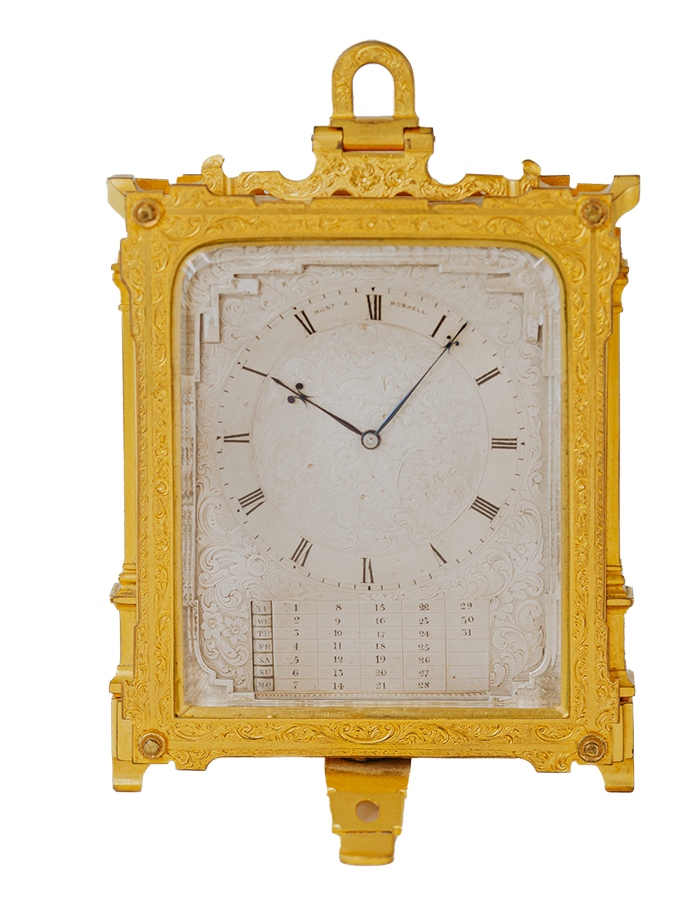
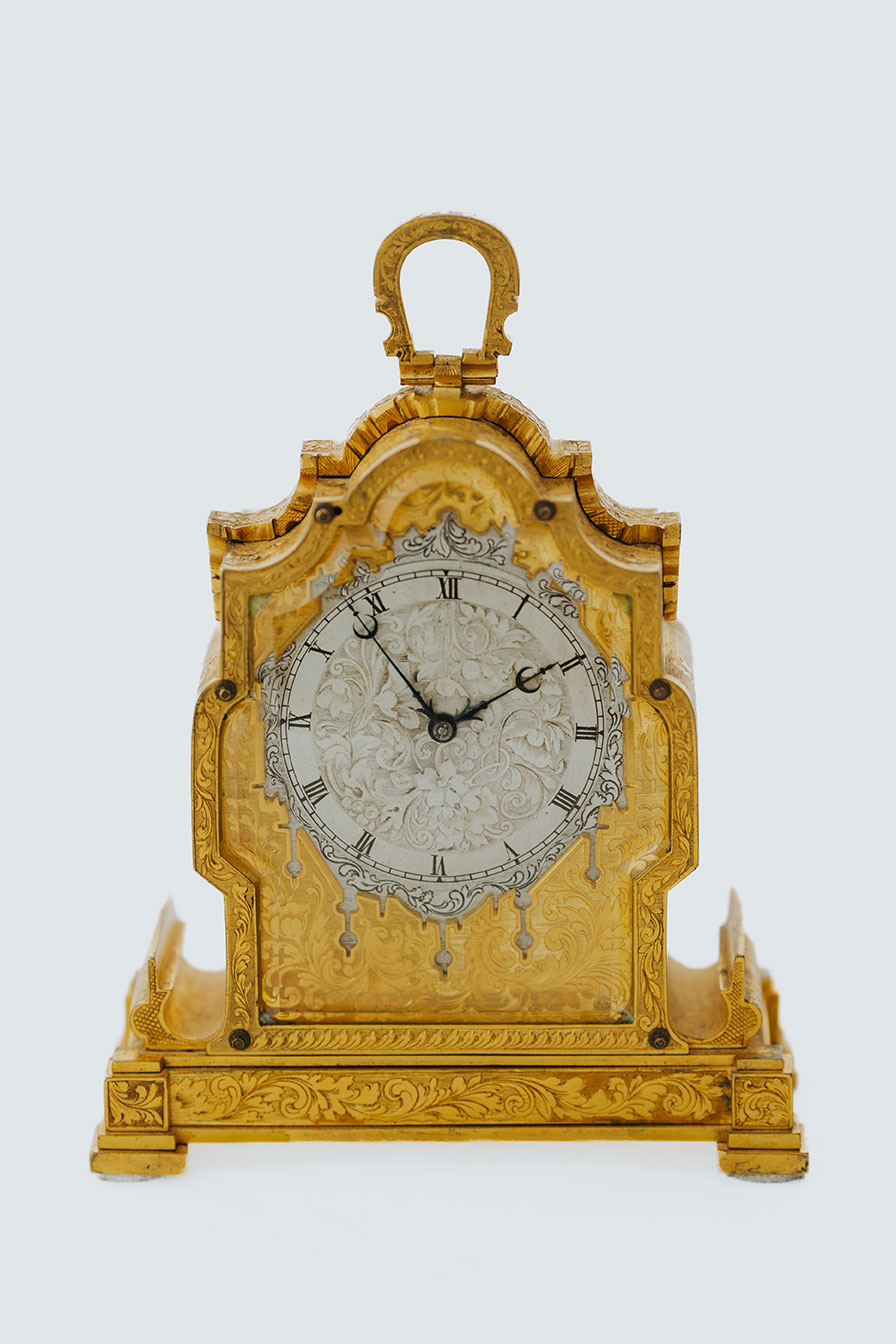
A mid-nineteenth century engraved strut timepiece.

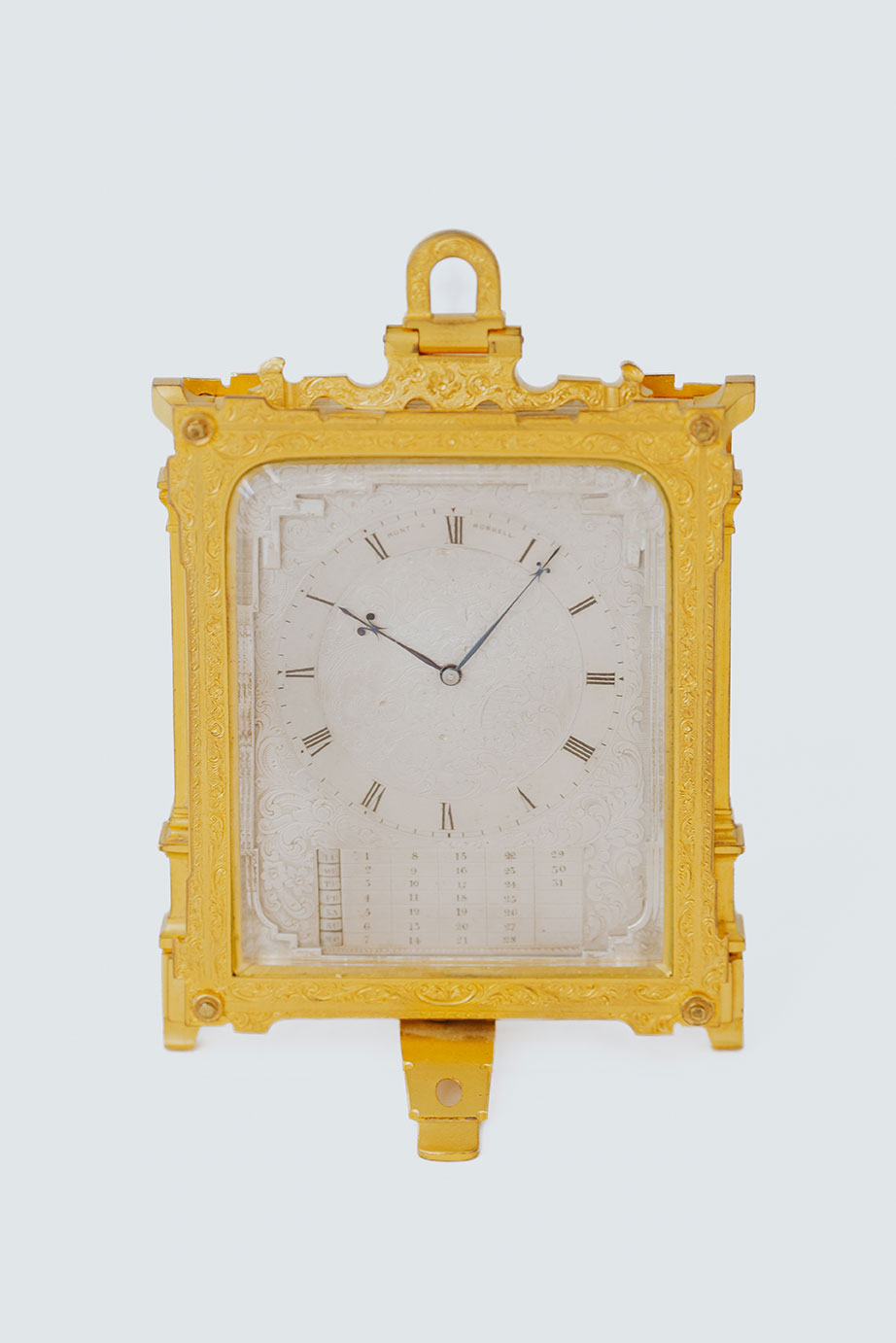
The finely engraved case numbered 1880, with folding handle and sprung strut support with bevelled bowed glass to the engraved silvered dial having Roman numerals and blued steel hands. The eight-day duration spring barrel movement, wound from the rear via a captive winder, with lever escapement signed Thos. Cole London and numbered 1880.

Case height: 6 inches (15cms).

GONNET
ELEVE DE ROBIN
Date: c1813
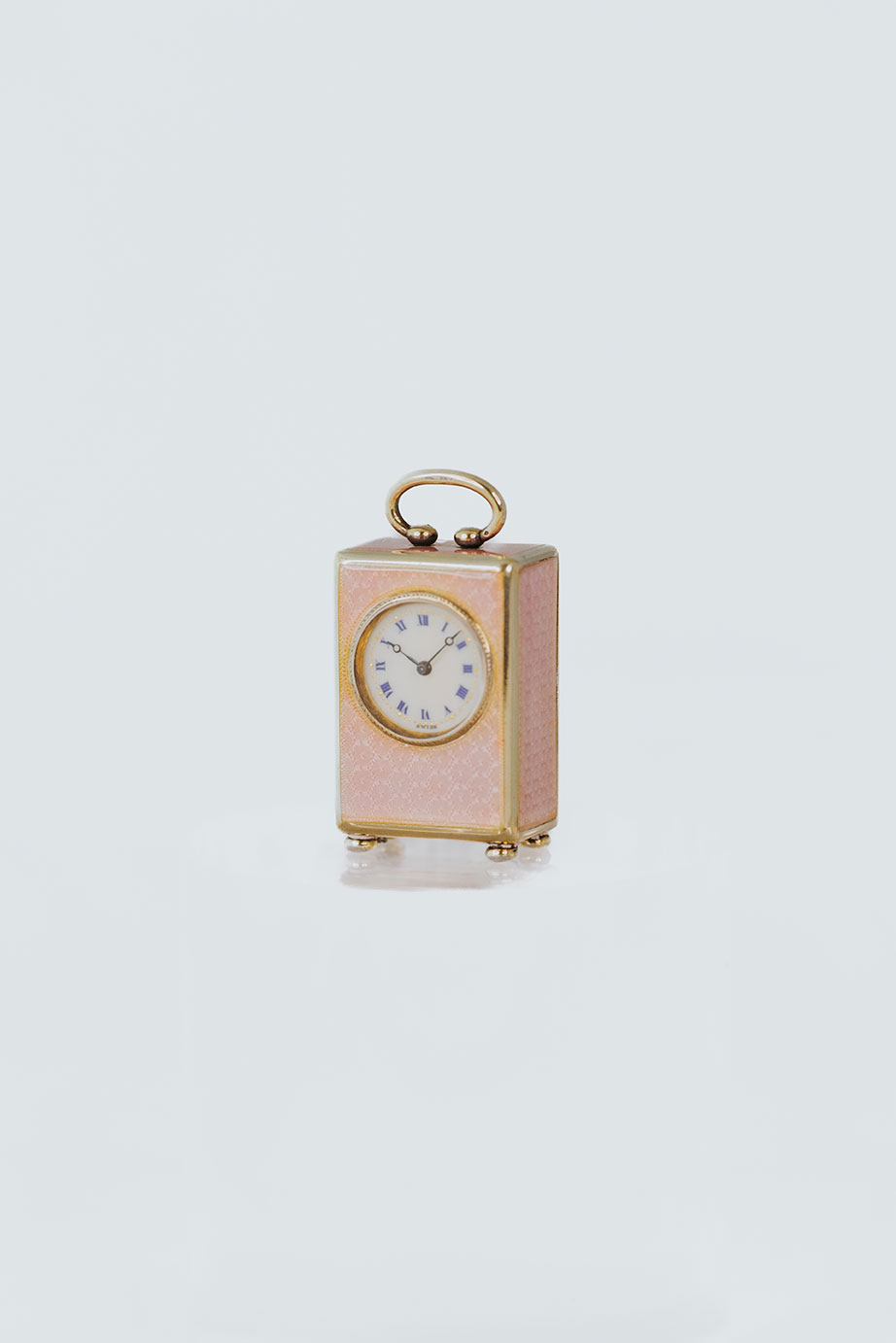
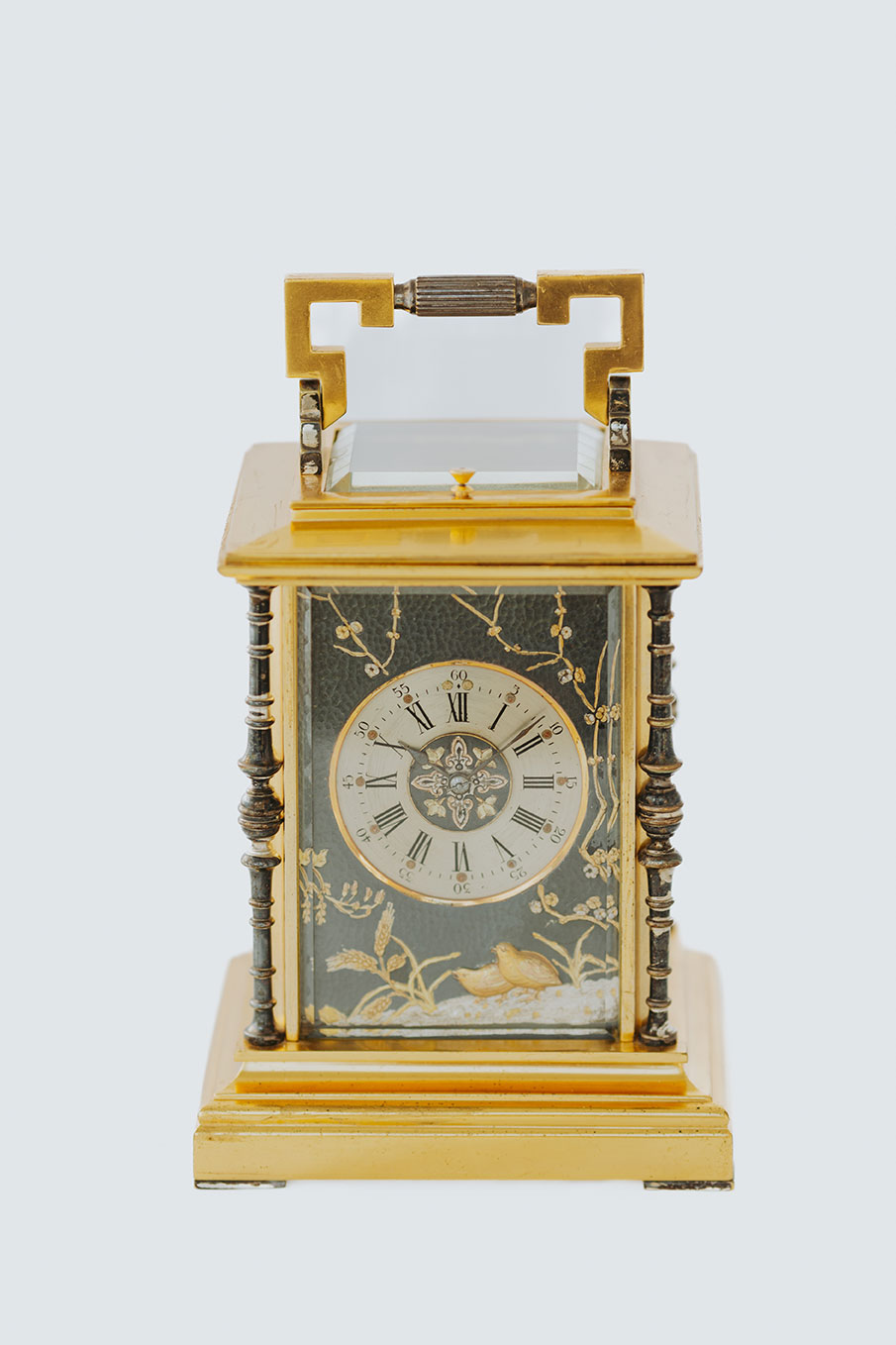
SWISS MINIATURE CARRIAGE CLOCK
Date: c1900.
STORR & MORTIMER
156 NEW BOND STREET
LONDON
Date: c1836


A good French portico table regulator

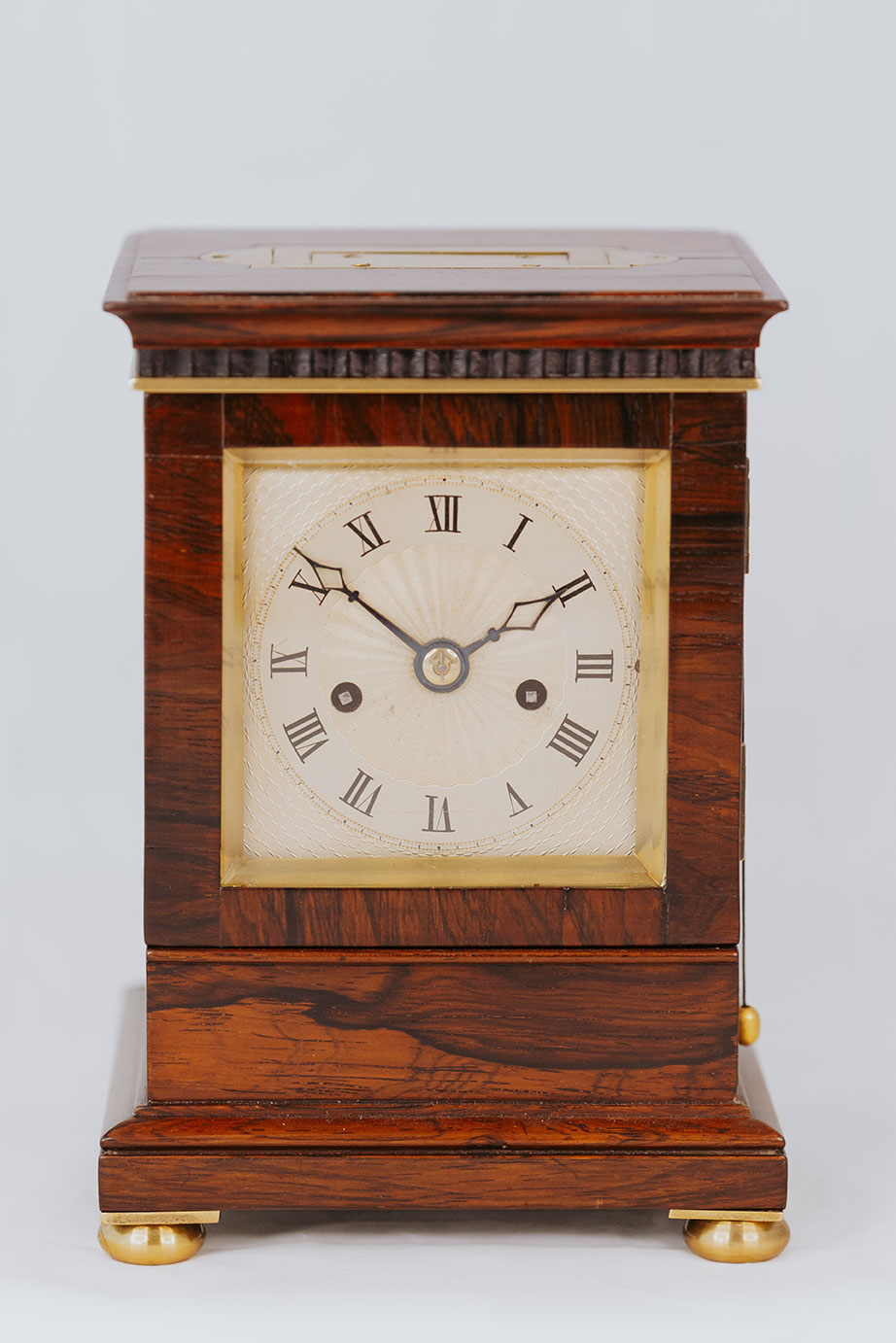
The top quality mahogany case with gilt-brass tapered columns and capitols with engine-turned decoration. The 5 ¼ inch dial with finely engine-turned centre, signed on the cartouche GONNET ELEVE DE ROBIN, recessed seconds chapter at X11, inset with an enamel chapter ring with Roman numerals and calendar numbered in Arabic numerals 1 to 31, surrounded by an engine-turned and engraved gilt bezel. The two train spring barrel movement with outside countwheel sounding the hours and half hours on a bell with PIN-WHEEL escapement and elaborate grid-iron pendulum. The movement protected by a cylindrical dust cover.

Case height: 19 ½ inches (49.5cms).

Note: The main springs dated 1813.

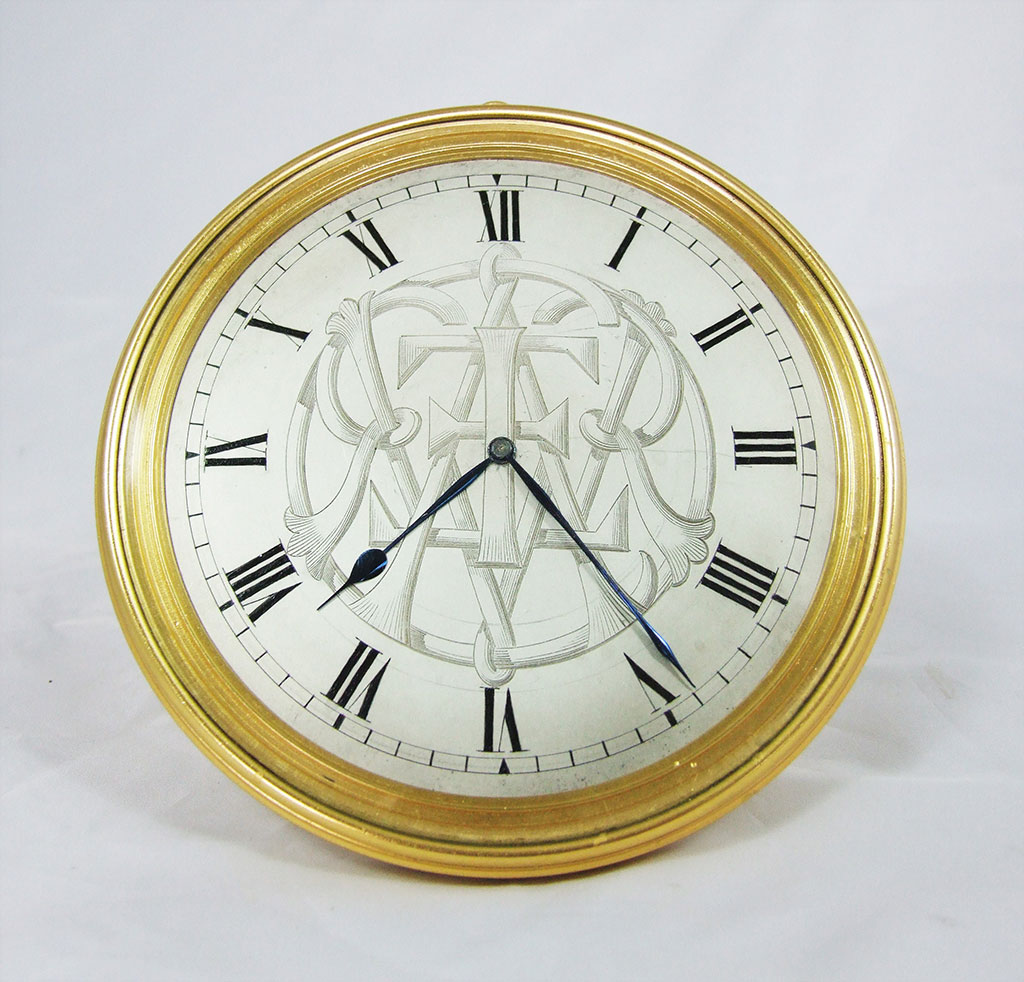
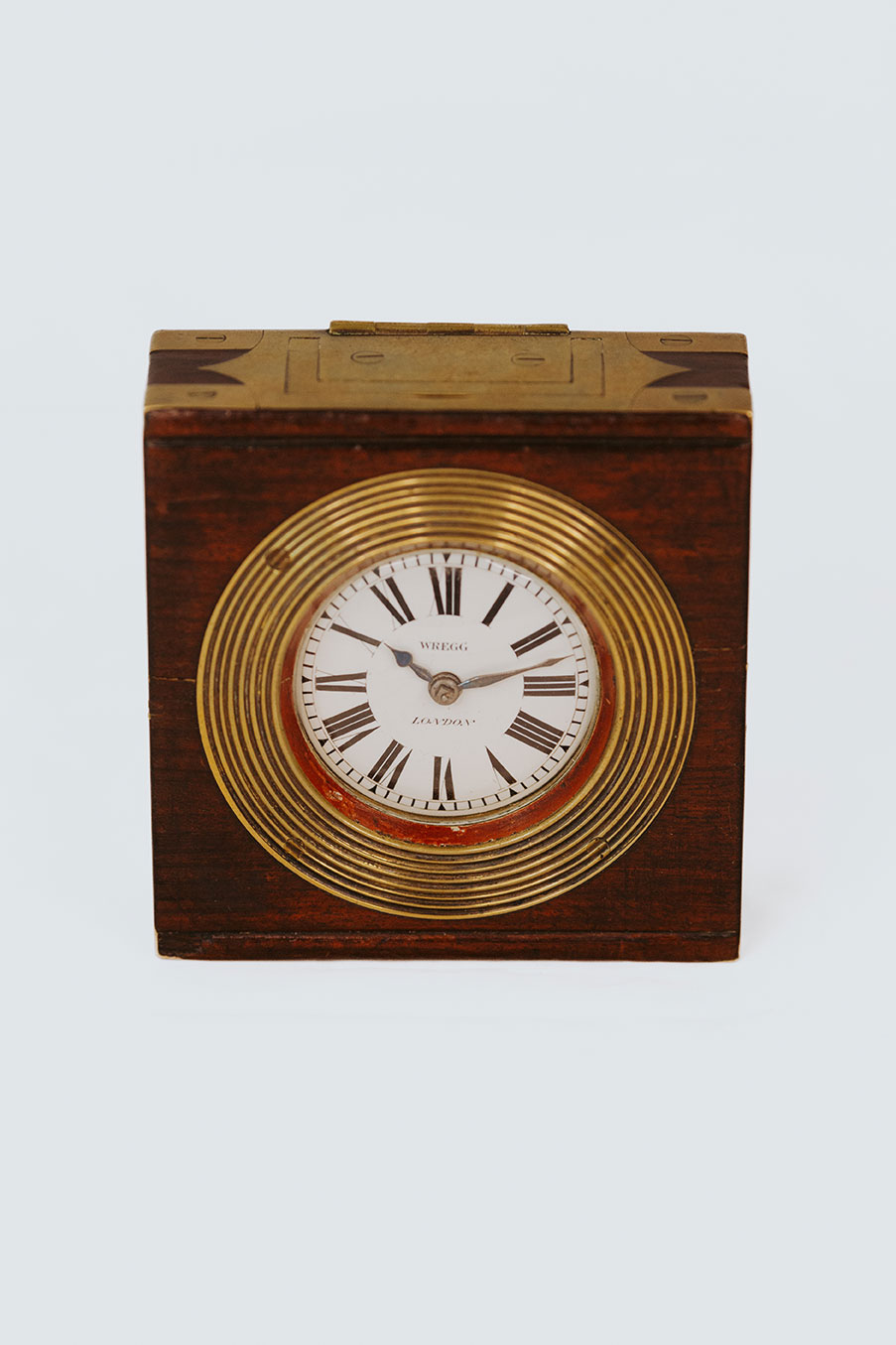
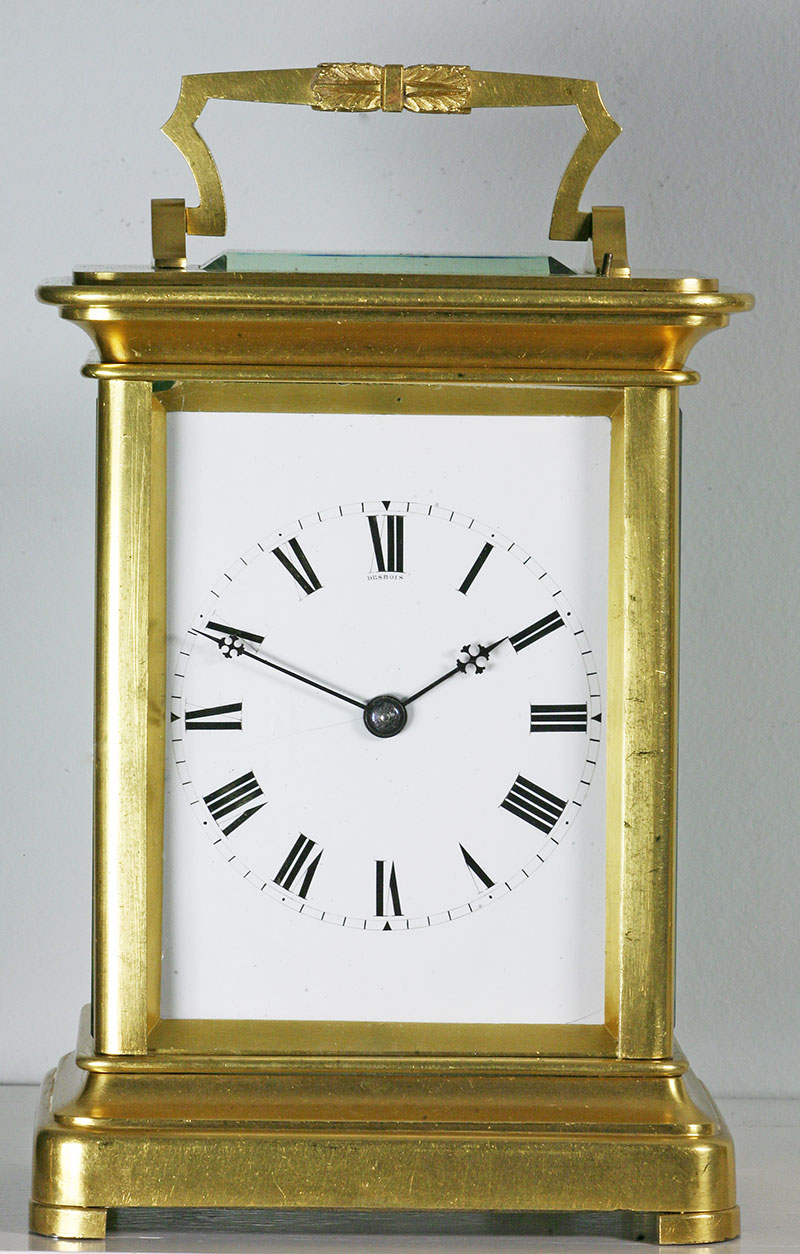
The gilt-brass glazed case with circular white enamel dial having black Arabic numerals with red outside minutes at five minute intervals, set within a silvered mask. The eight-day movement sounding on a gong with repeat button; the time barrel wound from the backplate and the striking barrel wound from the base, with a silvered top-mounted platform lever escapement.

See ‘A Century of Fine Carriage Clocks’ by Joseph Fanelli, items 90,92,94 and 95, these examples have similar movements.

Case height: 2 ½ inches (6.4 cms).

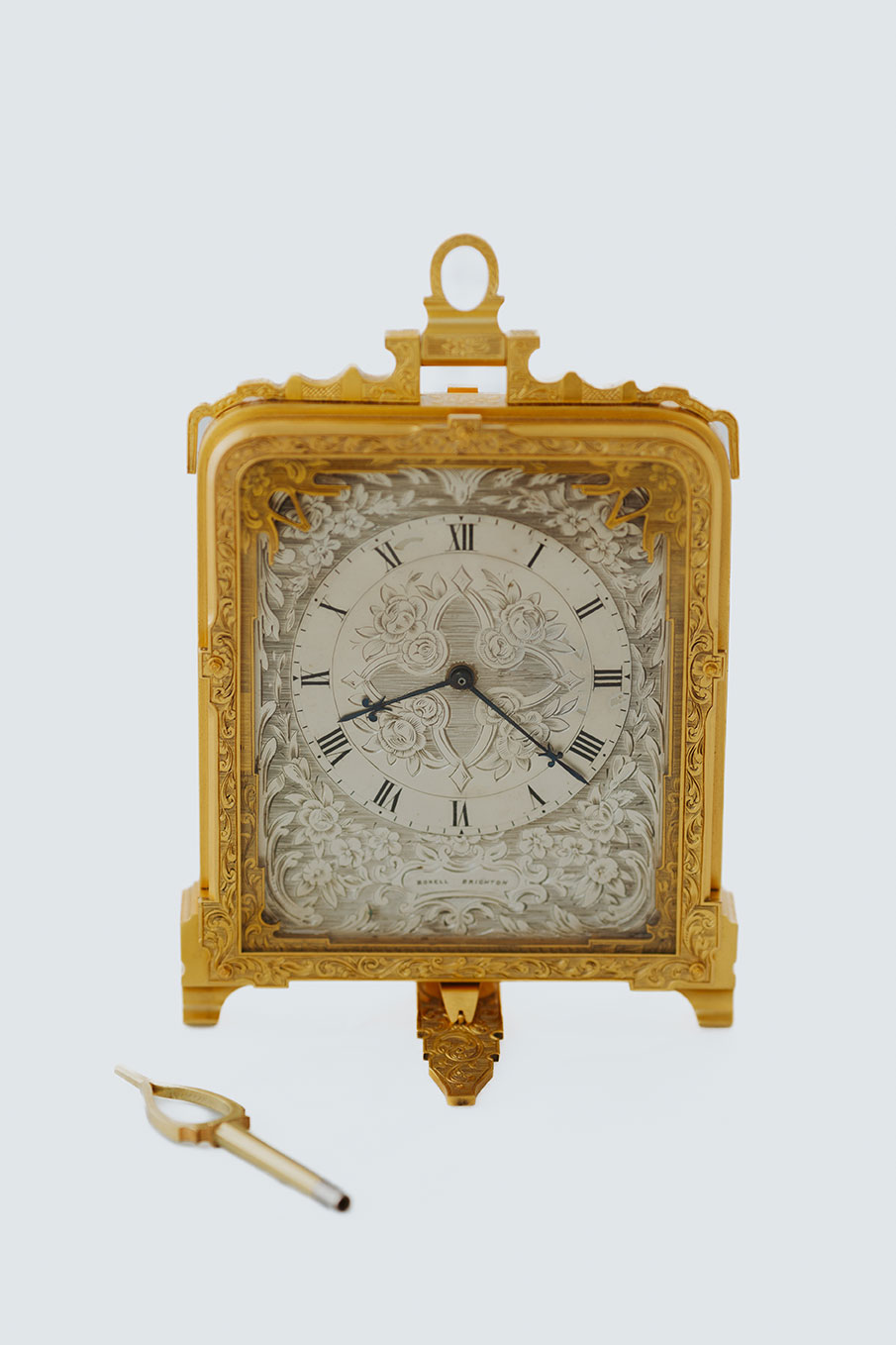
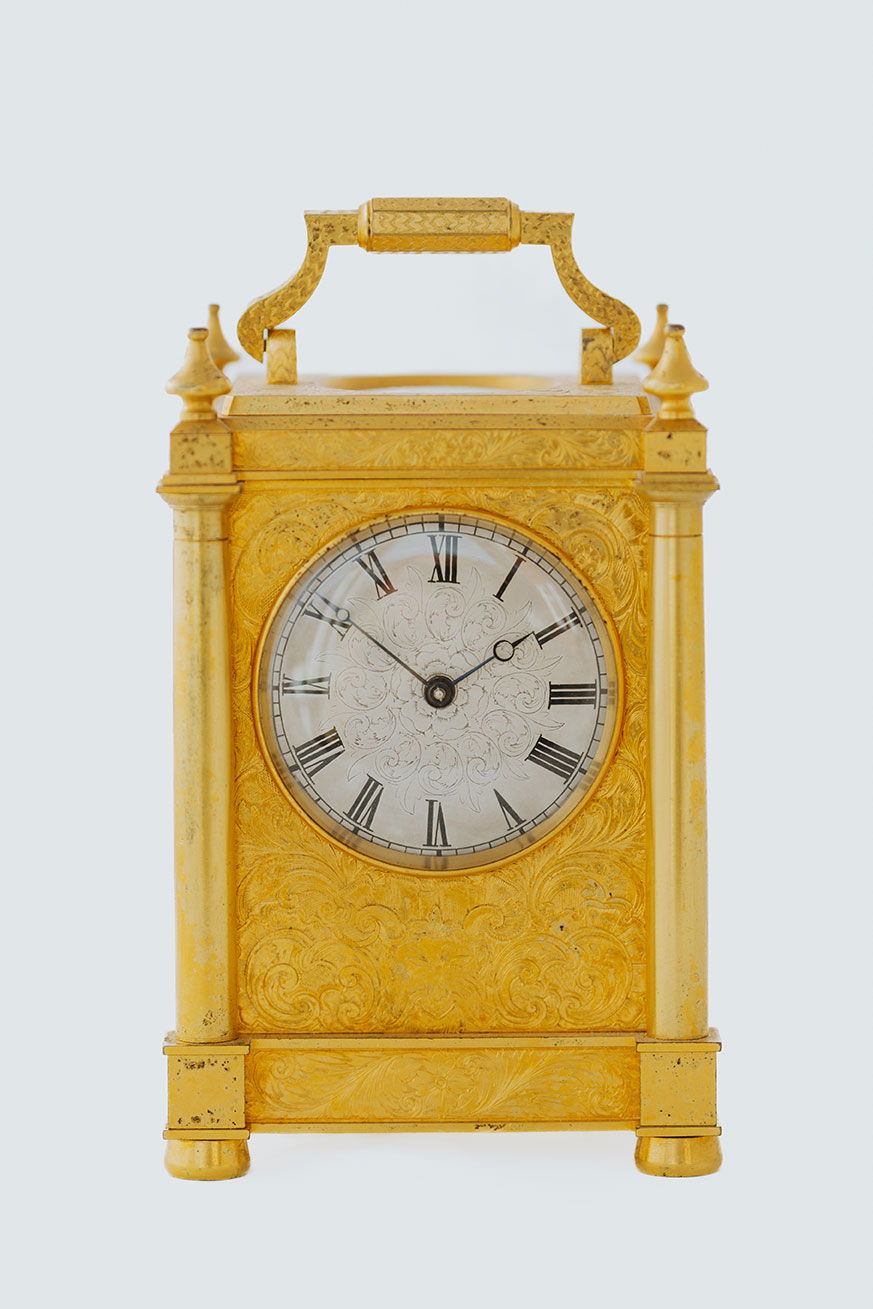
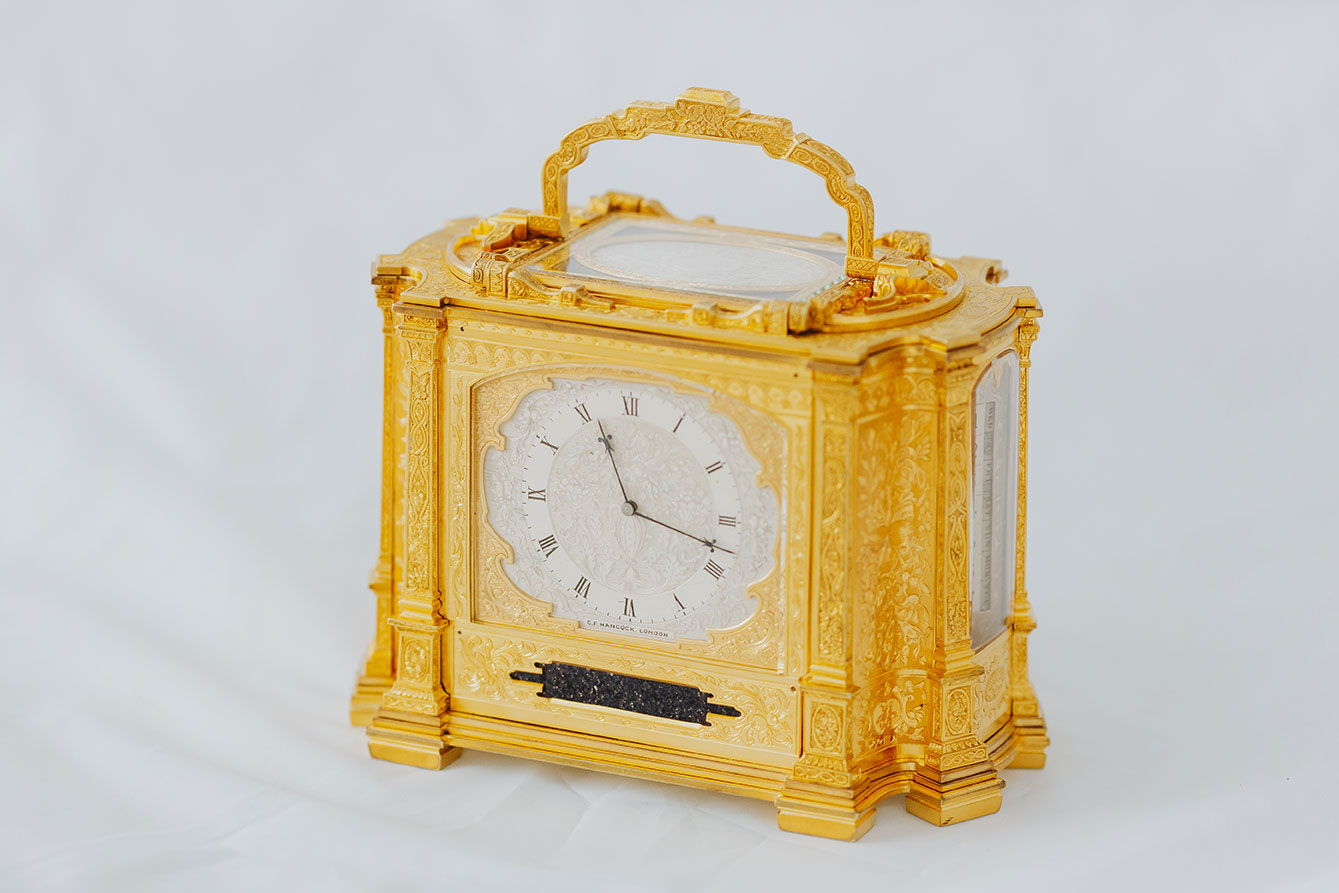
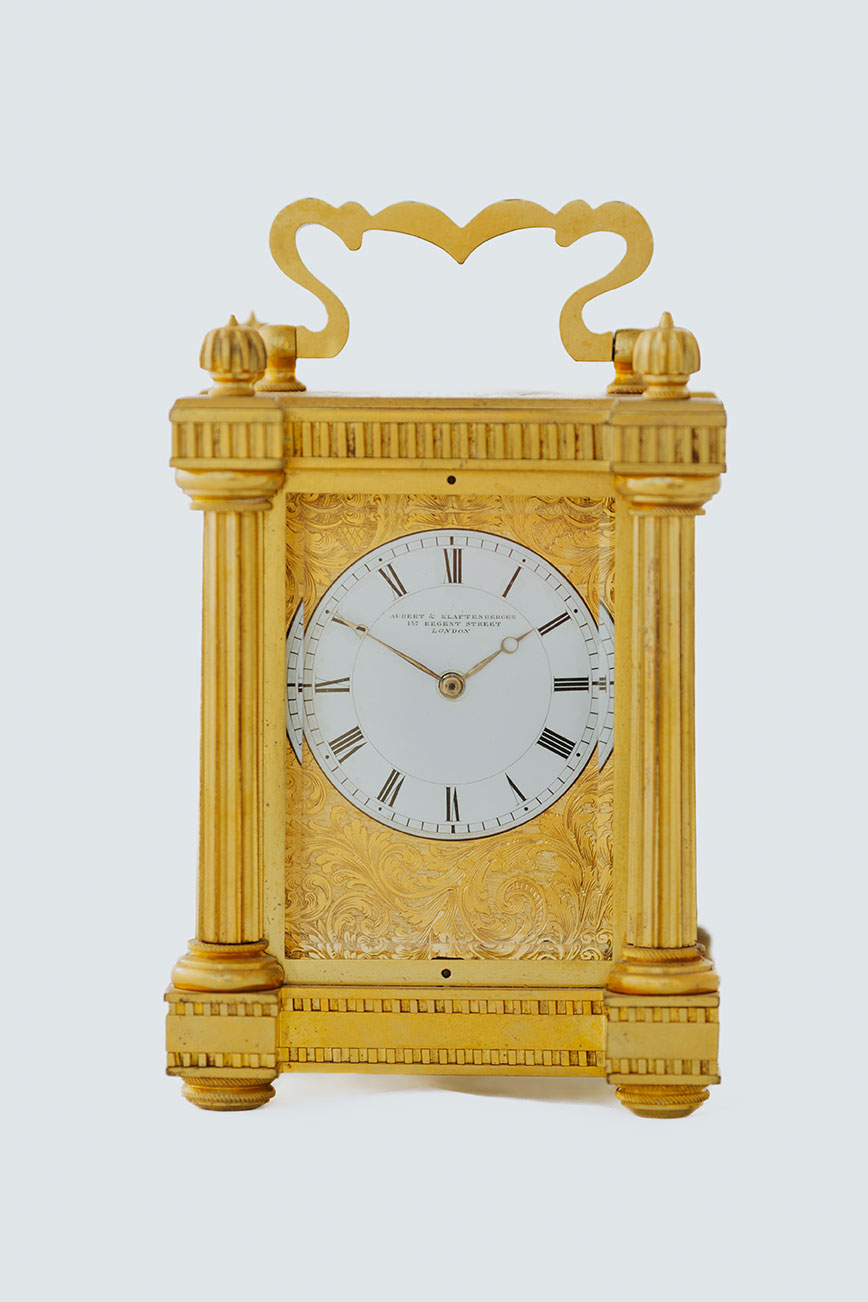
A fine English mid-nineteenth century gilt-brass carriage clock having a particularly well engraved case surmounted by four finials and a handle centred by a recessed 16 point compass over four tapering columns to a plinth base and turned feet, the silvered dial with Roman numerals and blued steel moon hands. The foliate engraved centre set within a finely engraved mask, the left-hand side panel containing a Fahrenheit thermometer, the right hand side panel a Reamur thermometer. The 8-day going barrel movement with lever escapement and integral hand-set key, signed on the inside of the rear door Storr & Mortimer, 156 New Bond Street, LONDON. With original cruciform winding key.

Case height: 6 inches (15cms)

The partnership of Storr & Mortimer was dissolved in 1838 and latterly became Hunt & Roskell the retailers of many fine clocks by Thomas Cole.
A carriage clock by Storr & Mortimer with similar thermometers and compass, is illustrated in ‘Carriage and other Travelling Clocks’ by Derek Roberts, page 346, Fig.34-1.

click on NEWS link for further information
Antique Clocks

Patric Capon is a Member of the British Antique Dealers' Association

Home of Capon Antique Clocks - Capon Antique Clocks Stock - Capon Antique Clock Services - Capon Antique Clock News -
Capon Antique Clocks Stock Archives
- About Capon Antique Clocks - Contact Capon Antique Clocks - Capon Antique Clocks Links

caponantiqueclocks.com - designed & hosted by pcblues.co.uk


Samples of our Fine Antique Clocks
Antique Clocks
Page 1
Click Thumbnail to Enlarge